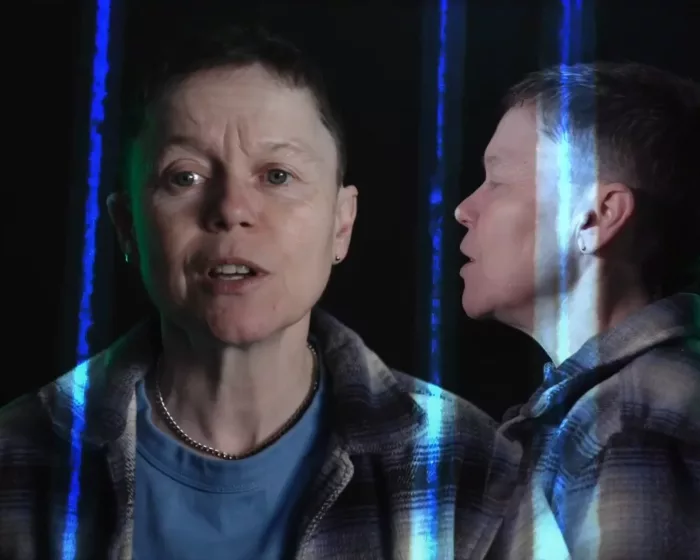
Jay Farley has been our 2026 Liverpool Writer In Residence. They are a non-binary, neurodivergent, working class, established filmmaker, digital artist and more recently a poet. Jay won a 2022 Creative Future Writers’ Award and has been published in the Queer Icons and Hot Poets anthologies, Sparks, and illustrated in Woop Woop magazine. Their debut book of poetry A [Cupboard] Full of Tomboys was created under the mentorship of T.S. Elliot Award winner Joelle Taylor and published by Broken Sleep Books. They also perform their poetry, with quirky props and sometimes with music and musicians.
Jay’s residency took place in Liverpool in collaboration with Open Eye Gallery and supported by First Take.
My Creative Future residency at Open Eye Gallery took shape as a project called Neuroqueer Heroes. It was a vibrant exploration of neurodivergence, queerness, identity and activism through poetry, workshops, art, and film.
At its core, this residency was not just about creating art—it was about challenging norms, reclaiming identity, and fostering collective resilience. Through collaborative co-created work, Neuroqueer Heroes invited us to rethink societal structures, embrace neurodiversity, and celebrate the beauty of queer existence in nature and human expression.
What is Neuroqueering?
Coined by Dr. Nick Walker in 2008, neuroqueering is a multi-layered concept that intertwines neurodivergence (such as autism or ADHD) with queer identity and activism. It operates on many levels, but the main three we looked into during my workshops were:
- As an Identity
Neuroqueering describes the inseparable intersection of being neurodivergent and LGBTQIA+. It highlights how neurodivergent brains—often wired to process “social rules” differently—naturally reject traditional norms around gender, sexuality, and behaviour. This rejection is not a flaw but a form of resistance against a society that demands conformity.
- As an Action
To “neuroqueer” means to actively subvert neuronormativity—the idea that there’s a “right” way for a brain to function. It involves:
- Unmasking: Rejecting the pressure to perform “normalcy.”
- Redesigning spaces: Creating environments that accommodate all communication styles and sensory needs.
- Collective agency: Ensuring everyone has a voice in shaping inclusive systems.
- As a Political & Creative Tool
Neuroqueering views non-normative thinking as a strength, not a limitation. It:
- Advocates for intersectionality, challenging systems of oppression like capitalism, racism, and colonialism.
- Positions neurodivergent and queer voices as essential to solving global issues—from climate change to social justice.
- As a Radical Reconnection to Nature & Rewilding the Mind
By rejecting oppressive structures, neuroqueering encourages us to reconnect with nature, ourselves, and each other in more authentic, equitable ways.
One of the most powerful themes of this project was the connection between neuroqueering and nature. Society has long misrepresented nature through a colonial, white-supremacist lens, reinforcing harmful hierarchies. But when we look at nature without bias, we see queerness and diversity everywhere:
- Spinach, penguins, mushrooms, clownfish, elephants, bees—all exhibit non-normative behaviours.
- Symbiosis and mutualism (like bees pollinating flowers) show that collaboration, not competition, is the foundation of life.
- Mycelium and fungi demonstrate how systems thrive when interconnected, a metaphor for neuroqueer solidarity.
Neuroqueering, then, is like rewilding the mind—decolonizing our bodies and thoughts to reclaim our place in the web of life.
Ultimately, neuroqueering is about embracing cognitive and behavioural diversity to build a more inclusive, collaborative, and resilient society.
The Residency
I first facilitated a series of workshops to explore neuroqueer poems, philosophy and action with a core group of neuroqueer poets: huge thanks to Kaitlin Schaal, Emyr Bamford, Sam Prior, Sam Keall, Amanda Ralph, Carrie Habb, Alixir Turnbull-Crane, Marie Hanafin, Garnett ‘Ratte’ Frost, Alfie Beacall, Moon Rice, Meave Devine, and Tom Moulsdale.
We created many poems, but the focus was a collaborative crown of sonnets–a poetic form where fifteen sonnets are linked by repeating lines. A crown of sonnets traditionally follows strict rules:
- Each of the fifteen sonnets has fourteen lines in iambic pentameter.
- The final line of one sonnet becomes the first line of the next, creating a chain.
- The master sonnet (the fifteenth) weaves together all the repeated lines in order.
However, the Neuroqueer Heroes took a different approach: “Did we stick strictly to the rules of the Crown? No, because we were a bunch of Neuroqueers! We couldn’t even if we tried.”
Instead, we leaned into our neurodivergent and queer ways of working, allowing a natural, fluid process to guide us. The result? A unique, collaborative poem that reflects the multitudes of neuroqueer experience while celebrating shared resistance and resilience.
I also delivered some visual art sessions, including creating anthotypes (photographic prints made from plant pigments). This allowed us a different way in to writing our poems and brought us closer to nature.
I collated the crown and other thoughts and work created into a zine, film and website which you can see here.
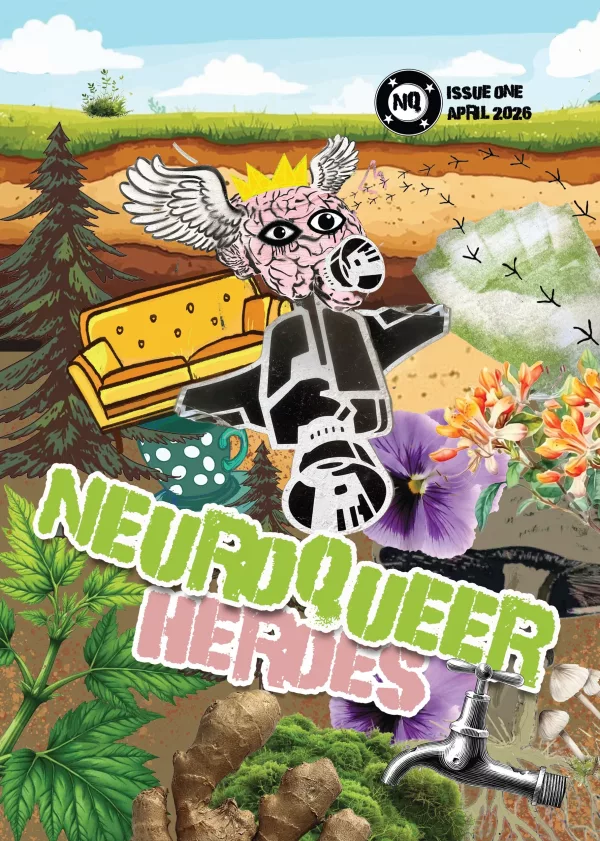
The zine is available at Liverpool’s independent bookstore News from Nowhere. Special thanks to Emyr Bamford for creating an accessible/large-print version of the zine, which you can find on the website, ensuring the work is inclusive for all readers.
The film was supported by the amazing First Take. Before the residency began, I knew I wanted to make a film but had no idea how it would turn out. The result became not only a film, but a spell and ritual of reconnection with nature. It has since gone on to be shown at the Wyrd Wyrale Festival at Bidston Observatory.
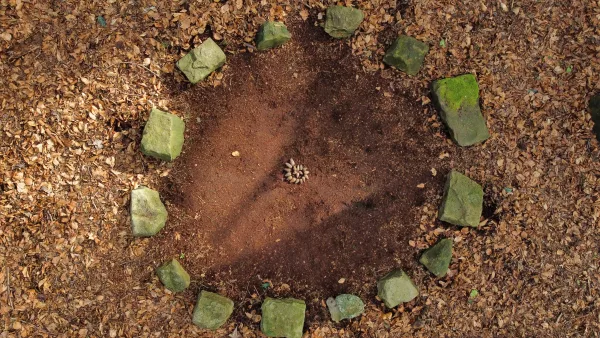
It featured every Neuroqueer Hero participant reading their sonnet. Alixir Turnbull-Crane and I filmed the rest under a full moon at Bidston Hill nature reserve, filming elements of each of the sonnets in a spell circle. It was a spell to reject the curse of capitalism: a dedication to rewilding our minds, bodies, and souls, and a celebration of neuroqueer existence as an act of nature defending itself.
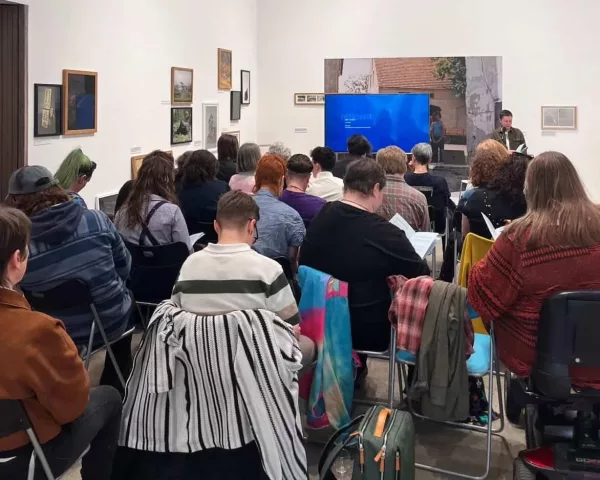
In addition to hosting the workshops, Open Eye Gallery held a public showcase for the anthoypes, zine launch, film screening and created a communal public altar.
I also wrote a poem for the Creative Future Writers’ Award 2026 anthology which was heavily influenced by my residency.
None of this would have been possible without the neuroqueer poets and collaborators, but especially Creative Future, Open Eye Gallery and First Take (and its support from the Paul Hamlyn Foundation).
What did I learn?
I learned that the shoot of an idea can grow into a massive project. But also that I need to take my time and I don’t need to do everything all at once! I ended up creating a year’s worth of work in a couple of months! Pure ADHD hyper focus. But I’m proud of what we achieved as a group and looking forward to where it will take me and the rest of the group next.
The project has led me to completely reframe how I look and interact with the world and I am now in the process of trying to rewild my mind, body and creative practice. I am currently experimenting with plant-based photography and film, and how that ties into my poetry.
Hope and change is not something we ask permission or wait for. It’s something we can create now.